
#3 History of Model Railways:
Continued from Blog #2
With the National Model Railroad Association (NMRA) and Normen Europäischer Modellbahnen (NEM), manufacturers and hobbyists soon arrived at de facto standards for interchangeability, such as gauge. However, trains were only a rough approximation of the real thing. Official scales for the gauges were drawn up, but they were not initially followed rigidly and were not necessarily correctly proportioned for the chosen gauge.
For instance, 0 (zero) gauge trains operate on track that is too widely spaced in the United States, where the scale is accepted as 1:48. In Britain, 0 gauge uses a ratio of 43.5:1, or 7 mm per foot, and the gauge is near to correct.
British OO standards operate on track that is significantly too narrow. The 4 mm per foot scale on a 16.5 mm (0.65 in) gauge corresponds to a track gauge of 4 ft 1½ in (1,257 mm)—7 inches, or 178 millimetres, undersized. A 16.5 mm (0.65 in) gauge corresponds to 4 ft 8½ in (1,435 mm) standard gauge in H0 (half-0), at 3.5 mm per foot, or 1:87. This arose because British locomotives and rolling stock are smaller than those found elsewhere, leading to an increase in scale so that H0-scale mechanisms could be used.
Most commercial scales have standards that include wheel flanges that are too deep, wheel treads that are too wide, and rail tracks that are too large. In H0 scale, the rail heights are codes 100, 87, and 53.
Later, modellers became dissatisfied with these inaccuracies and developed standards in which everything is correctly scaled. Modellers use these standards, but they have not spread to mass production. The inaccuracies and overscale properties of commercial scales ensure reliable operation and allow for shortcuts necessary for cost control.
The finescale standards include the UK's P4 and the even finer S4, which uses track dimensions scaled from the prototype. This 4 mm per foot modelling uses wheels 2 mm (0.079 in) or less wide, running on track with a gauge of 18.83 mm (0.741 in). Check-rail and wing-rail clearances are similarly accurate.
A compromise between P4 and OO is “EM,” which uses a gauge of 18.2 mm (0.717 in), with more generous tolerances than P4 for check clearances. It gives a better appearance than OO, although its pointwork is not as close to reality as P4. It suits many modellers for whom time and improved appearance are important.
There is also a small following for finescale OO, which uses the same 16.5 mm gauge as OO but with the finer-scale wheels and smaller clearances used with EM. It is essentially “EM minus 1.7 mm.”
Modules
Many groups build modules: sections of layouts that can be joined together to form a larger layout for meetings or special occasions. Each kind of module system has an interface standard, so modules made by different participants can be connected, even if they have never been joined before. Many module types are listed in the “Layout standards organizations” section of the related article.
Couplers and connectors
Main article: Railway coupling § Model trains
In addition to different scales, there are also different types of couplers for connecting cars, and they are not compatible with one another.
In HO, Americans standardized on horn-hook, or X2F, couplers. Horn-hook couplers have largely given way to a design known as a working knuckle coupler, popularized by Kadee Quality Products Co. A number of other manufacturers have since emulated it. Working knuckle couplers are a closer approximation of the “automatic” couplers used on the prototype in the United States and elsewhere.
European manufacturers also standardized in HO, but on a coupler mount rather than on a coupler itself: many varieties of coupler can be plugged into and out of the NEM coupler box. None of the popular couplers resembles the prototype three-link chains generally used on the continent.
For British modellers, whose most popular scale is OO, the normal coupler is a tension-lock coupler. Again, it does not attempt to replicate the usual prototype three-link chain couplers. Bachmann and, more recently, Hornby have begun offering models fitted with NEM coupler pockets. In theory, this enables British railway modellers to substitute any other NEM 362 coupler, although many Bachmann models place the coupler pocket at the wrong height.
A fairly common alternative is to use representations of the chain couplings found on the prototype. However, these require large-radius curves to avoid derailments.
Other scales have similar ranges of incompatible couplers. In all scales, couplers can be exchanged, with varying degrees of difficulty.
Landscaping

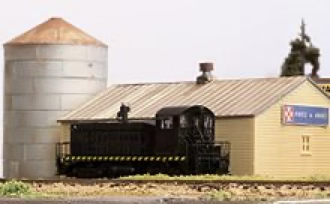
Some modellers pay close attention to landscaping their layout, creating a fantasy world or modelling an actual location, often a historic one. Landscaping is termed “scenery building” or “scenicking.”
Constructing scenery involves preparing a sub-terrain using a wide variety of building materials, including (but not limited to) screen wire, a lattice of cardboard strips, or carved stacks of expanded polystyrene (Styrofoam) sheets. A scenery base is applied over the sub-terrain. Typical base materials include casting plaster, plaster of Paris, hybrid paper pulp (papier-mâché), or a lightweight foam/fibreglass/bubble-wrap composite such as Geodesic Foam Scenery.
See you until my next blog.